This past year saw major shifts affecting patent adjudication, prosecution strategy, biotechnology claiming, artificial intelligence, standard-essential patents, and litigation trends. Moving into 2026, there is increasing uncertainty at institutional decision points—particularly the Patent Trial and Appeal Board (PTAB) and US Patent and Trademark Office (USPTO)—which attorneys are responding to with growing strategic sophistication.
PTAB Practice After the Election: A Fundamental Shift
Scott McKeown, Shareholder, Post-Grant Proceedings Practice:
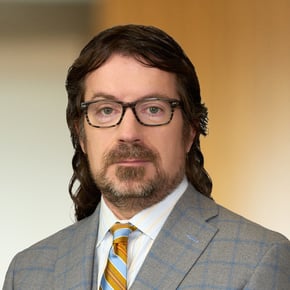 Analyzing the new administration’s impact on the PTAB, Scott noted that there was a rapid and largely unannounced overhaul of the PTAB’s practices: “Almost immediately after the election, the interim leadership withdrew a number of notable practice memos and precedent, and changed practice before the PTAB.” Scott explained that longstanding guidance was rescinded, and discretionary denial doctrines were expanded, significantly restricting access to PTAB review. “The institution process was really made over such that it became not only very difficult, but unexpectedly so in that many of the policy changes find no support in the AIA statutes or previous history of PTAB operations.”
One of the most consequential developments was the introduction of a “settled expectations” concept for patents older than six years—an approach with no clear precedent in US patent law. The result has been a sharp reduction in PTAB availability for accused infringers, particularly those already defending district court or ITC actions. “This series of changes at the PTAB has drastically undermined the ability of defendants in patent troll litigation to leverage the PTAB as a low cost alternative forum,” Scott concluded.
More Patent Litigation in 2026?
Greg Corbett, Chair, Litigation Practice:

“Looking ahead to 2026, I see a legal environment conducive to increased patent litigation, and that’s due to a number of different factors: 1) the pro-patent policy landscape that has evolved at the PTAB; 2) legal developments in a number of different jurisdictions and venues, including the International Trade Commission, that have made it more beneficial for patent owners to bring litigation; and 3) case and legal developments in other areas of law, including issues around patent damages, funded litigation and AI tools.” Greg added that “we’re starting to see harmony in terms of SEPs and injunctions, and it will be interesting to see how that plays out in terms of general global litigation strategies, and also how that might affect the US.”
USPTO Backlog and Strategies to Accelerate Examination
Ed Russavage, Shareholder, Electrical & Computer Technologies Practice:
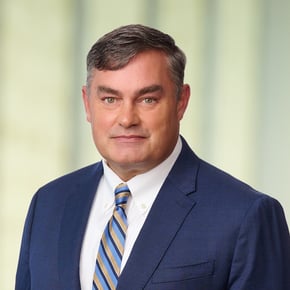 Innovators also continue to encounter headwinds and uncertainty at the USPTO, where the backlog of patent applications waiting for examination was well over 800,000 in early 2025. These persistent delays have been driven by increased filings, examiner attrition, and internal production changes, but Ed explains that there are ways to speed up the process: “If you do have an important application, we’re advising clients to file a Track One application. Filing [a Track One application] with a reduced number of claims (ten or less)... should result in an office action within one and a half to two months, and that significantly shortens the delay time from filing to first examination.”
Artificial Intelligence
Christina Licursi, Shareholder, Trademark & Copyright Practice:

In 2025 and continuing into 2026, the one constant is an interest in AI and brand identity. Christina explained that in trademark law, “we are industry agnostic—we work across the whole gamut of industries, from life sciences to high tech, to consumer products. Consistent across all industries is an interest in AI. Whether it’s a company that’s creating chat bots, data analysis platforms, or a consumer product that wants a virtual footprint. . . there is a ubiquitous interest in incorporating AI into brand identity.”
Christina also discussed how AI-driven IP analytics and monitoring tools are reshaping client engagement: “One big trend that we are seeing right now is the support that AI is providing with IP analytics, portfolio analysis, and monitoring. It has all become so much more sophisticated, and so much easier, which is empowering clients to do a lot of this work themselves. But then they’re coming to us with discreet issues that they need to address, and we are poised to take action. And I think that that is a big difference even from three years ago, where it felt like the onus of the monitoring was predominantly on law firms, and now it seems like a much more dynamic fluid exchange, and we’ll see a lot more of that.”
Biotech Claims After Amgen v. Sanofi
Dan Young, Shareholder, Biotechnology Practice:
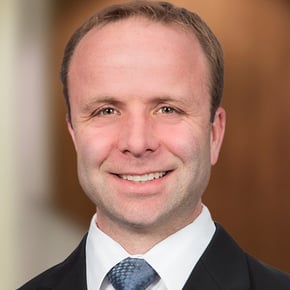 Explaining that recent decisions like Amgen v. Sanofi tightened the scrutiny of broad functional genus claims in the innovator-to-innovator space, Dan clarified that “The law really hasn’t changed, but there’s a renewed emphasis on scope issues, and that’s forced innovators to really rethink and work with us in terms of how they draft claims. We’re seeing a lot more reliance on creative claim strategies, including means plus function, claiming backed by strong structural disclosure, and steps being taken to get some breadth around actual innovations at a sequence level. We’re also seeing SAR-driven structural claims that are aimed at capturing meaningful breadth without really stretching into the functional.” Dan emphasized that these strategies are increasingly critical not only for innovator-to-innovator disputes, but also for insulating portfolios against fast-moving global competitors: “Really strong, creative claiming strategies are essential in today’s environment.”
Diagnostic Methods and Subject Matter Eligibility
Jonathan B. Roses, Shareholder, Pharmaceutical Practice: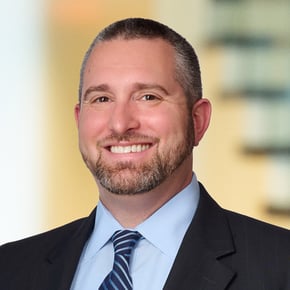
In 2026, “there is potential for easier treatment of diagnostic method claims due to recent USPTO moves that make it easier for applications to pass subject matter eligibility hurdles.” Jonathan noted that in the in vitro diagnostic area this is “potentially a big boon…that has flowed from a long series of decisions from the Supreme Court and the federal courts…which created a very narrow path for subject matter eligibility for method claims…under Section 101.” However, Jonathan explained that this is “potentially setting up a dichotomy between the USPTO and the courts. The courts are not operating under these mandates from the USPTO, as guidance on subject matter eligibility is informative for courts but not binding on them. Supreme Court jurisprudence is still what’s binding on the federal courts, so that potentially sets up an area where you can have an easier time getting these claims from the USPTO, but perhaps a much tougher time enforcing the claims and having them survive validity challenges.”
Standard-Essential Patents and Global Injunction Trends
Zach Piccolomini, Shareholder, Electrical & Computer Technologies Practice:
 Zach discussed recent international developments involving standard essential patents (SEPs), which are patents that will be infringed when a standard-based technology is used (for example, WiFi). He noted that “decisions by international courts, including preliminary injunctions issued by courts in Germany, Brazil, and Columbia, suggest an increasing willingness to grant injunctive relief for SEP infringement,” an area that has long been viewed as inhospitable to injunctive relief. “Although the SEP landscape remains fragmented, these trends may influence global licensing negotiations, rate-setting frameworks, and ultimately US litigation strategy.”